
Ramadan Fasting: A Two-Way Spiritual Journey Between Soul and Nature with Reverence
Ramadan fasting,Ramadan month,Islamic fasting practice,spiritual revival
In Islamic culture, Ramadan fasting is never simply about dietary restraint, but rather a comprehensive spiritual practice that encompasses both body and mind—a way of life that returns to nature's essence, purifies the soul, and cultivates reverence.
Ramadan Fasting: A Two-Way Spiritual Journey Between Soul and Nature with Reverence
In Islamic culture, Ramadan fasting is never simply about dietary restraint, but rather a comprehensive spiritual practice that encompasses both body and mind—a way of life that returns to nature's essence, purifies the soul, and cultivates reverence. It carries the power of faith and embodies wisdom about the relationship between humans and nature, and between individuals and communities. As Abdul Wahid Hamid conveys in "Islam: The Natural Way," fasting is an important path for humans to free themselves from the bondage of selfish desires and draw closer to the natural state of life.
The Practice of Fasting
For adult Muslims, the ninth month of the Islamic calendar—Ramadan—is the obligatory month of fasting. This spiritual practice lasts 29 to 30 days (the exact duration depends on the sighting of the new moon, following the teaching "fast when you see the new moon, break fast when you see the new moon") and has clear guidelines. From dawn until sunset, Muslims must consciously abstain from food and water, refrain from marital relations and all improper behavior, thereby restraining desires and examining themselves.
Of course, Islamic teachings are also full of humanistic care: in cases of illness, travel, pregnancy, breastfeeding, and other special circumstances, fasting may be temporarily suspended, but the missed days must be made up at an appropriate time later, ensuring both the completeness and flexibility of the practice. This reflects the natural way of "moderation" and "tolerance" in Islamic culture.
Reverence: The Spiritual Shield
The Quran clearly explains the core purpose of fasting: "so that you may attain Taqwa (God-consciousness, or reverence for Allah)." This reverence is not mere fear, but rather humility and respect for life, the Creator, and natural laws. Fasting acts like a "spiritual shield." The noble Prophet (peace be upon him) once said with simple yet profound words that illuminate its meaning—it can shield against the temptations of desires, cleanse the soul of disobedience and corruption, allowing people to return to their true nature through restraint and align with the natural order.
The Prophet (peace be upon him) also declared: "Whoever fasts during Ramadan with faith and seeking reward, his previous sins will be forgiven." This further endows fasting with spiritual value beyond mere form, making it an important opportunity for Muslims to seek redemption and self-improvement.
Ramadan: A Spiritual Revival Journey Immersed in Faith
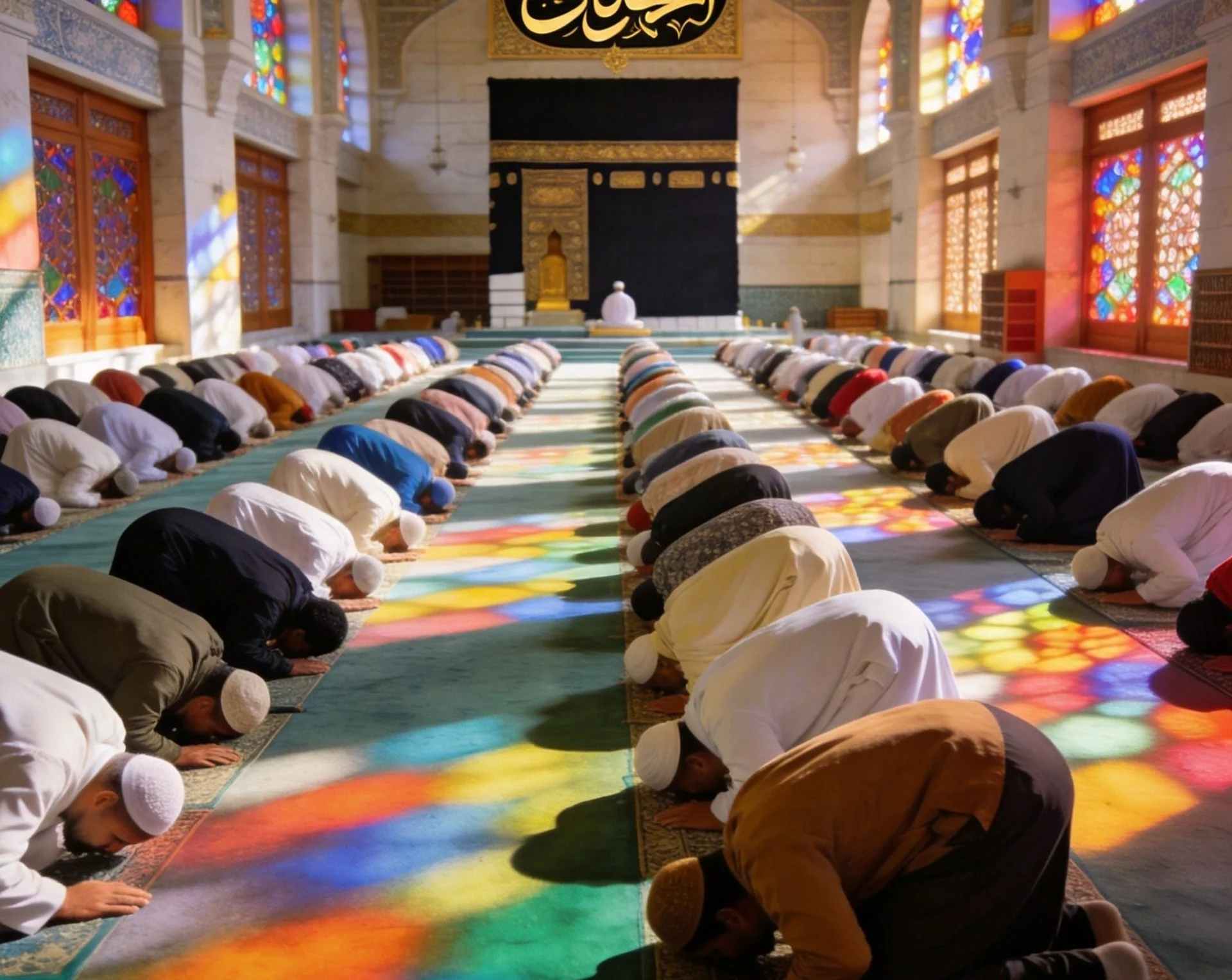
Ramadan is not only a physical fast but also a spiritual feast, known as "the Month of the Quran"—because this sacred scripture was revealed to Prophet Muhammad (peace be upon him) during Ramadan. Therefore, Ramadan has become the best time for Muslims to draw close to the scripture and listen to divine guidance. Throughout Ramadan, a devout atmosphere permeates every corner. Muslims' prayers become more earnest, and in addition to daily prayers, they perform additional Tarawih prayers at night, deepening faith and nourishing the soul through collective recitation and prayer.
During the last ten days of Ramadan, many Muslims choose to enter the mosque for Itikaf (spiritual retreat), temporarily setting aside worldly distractions to focus on recitation, meditation, and reflection, seeking Allah's guidance and forgiveness. This period of deep spiritual practice is a process of dialogue with oneself and with faith, allowing people to quiet their hearts in a noisy world, re-examine their words and deeds, recalibrate life's direction, and achieve spiritual revival and elevation.
Moreover, Ramadan is an excellent opportunity to cultivate virtues and perfect oneself. Through daily restraint, Muslims gradually develop qualities of patience and resilience, learn to control anger, restrain their tongues, abandon harsh and malicious words, and treat those around them with gentleness and humility. At the same time, fasting is also a natural physical adjustment—through regular fasting, one can break free from the troubles of obesity and laziness, allowing the body to return to lightness and health. Many people also benefit from this natural dietary regulation. However, health experts remind that during Ramadan, one should avoid overeating, choose light meals, and avoid late-night snacks to truly reap the dual nourishment of body and mind.
Sharing and Moderation: Community Warmth and Natural Wisdom in Ramadan
The core spirit of Ramadan has never been limited to personal practice but extends to connecting communities and spreading goodwill. Fasting allows Muslims to personally experience hunger, awakening compassion within, making them more appreciative of their current lives and more willing to extend help to vulnerable groups. Islamic teachings urge Muslims to be more generous in charity during Ramadan, and at the end of Ramadan, every capable Muslim must pay Zakat al-Fitr—a small mandatory charity used to help the poor, orphans, and other vulnerable groups, allowing them to share in the warmth of the festival and spread the spirit of love and brotherhood.
This spirit of sharing is vividly reflected in Muslim communities worldwide. In Egypt, many communities host charity banquets for thousands, freely inviting impoverished residents to break fast together, regardless of social class, with only equality and friendship. In Morocco, the king personally presides over food donation ceremonies, distributing food baskets to poor families, while civil charities set up Ramadan tents to provide free iftar meals for the homeless. In China, Hui, Uyghur, and other Muslim communities also exchange special foods like youxiang and sanzi during Ramadan, with neighbors helping each other like family.
Many mistakenly believe Ramadan is a month full of hardship, but for Muslims, it is a time filled with joy and anticipation. Family reunions, gatherings with friends and relatives, the sound of Quranic recitation in mosques, and the festive atmosphere in markets all create the unique warm ambiance of Ramadan. Muslims eagerly welcome the arrival of Ramadan and, at its end, look forward to next year's reunion with reluctance and gratitude. It should be noted that Ramadan is not a time for idleness but rather a period to continue working and living normally while practicing, avoiding using fasting as an excuse for laziness—only through moderation and self-discipline can one truly understand the essence of fasting and not waste this sacred time.
Modern Insights from Ramadan: A Philosophy of Balance and Return
In the fast-paced modern world, the wisdom contained in Ramadan has even greater practical significance. Its advocacy of dietary moderation and restraint of desires serves as a warning against excessive consumption and indulgence. Its emphasis on reverence reminds people to respect natural laws, revere life, and uphold moral principles. Its message of sharing and mutual assistance is an important bond for resolving interpersonal alienation and strengthening community cohesion.
Ramadan customs in different regions also demonstrate the diversity and inclusiveness of Islamic culture. In Turkey, Ramadan is called "Candy Day," with households conducting thorough cleaning, children knocking on neighbors' doors asking for candy, and relatives visiting each other to resolve grievances. In Malaysia, during Eid al-Fitr, "open house" activities are held, with palaces opening to the public, sharing food and celebrating together. In China, Eid al-Fitr (also known as Rozi Festival) is listed as a traditional minority festival, with Hui and other Muslim communities taking holidays to celebrate, holding congregational prayers, visiting graves, and paying respects, preserving ethnic culture.
Ultimately, Ramadan fasting is a dialogue with oneself, with faith, and with nature. It is not rigid constraint but a natural way of life—purifying the soul through physical restraint, returning to life's essence through reverence and goodwill, and building warm communities through sharing and unity. In this practice, Muslims gain not only the elevation of faith but also inner peace and strength—a spiritual nourishment that modern society urgently needs.